“Mittens are a very important part among other pieces of clothing and no other nation uses them in so much quantity as Latvians. To clothe hands seems as important as that of feet, legs; therefore they are always in mittens.
In Latvia the ancient gloves and mittens had been found in Riga during excavations. They are dated with the 15th century, but it is possible they have been knitted even earlier. Knitting needles which had been found give proof of the 14th century. They could have been the oldest knitted mittens in Eastern and Northern Europe.
Latvian patterned mittens not only are practically used as a piece of clothing, but also they are a present (gift, blossom) with a deep, symbolic meaning. Presenting of mittens is one of the most peculiar and beautiful manifestations of Latvian identity. In some of especially significant occasions the mittens being received as a gift were not worn, but handed over from one generation to another one. Many Latvian folk songs give proof that mittens are closely connected to the nation`s traditions, rituals of social life and feasts. As striking examples of that can be seen in the songs of engagement and wedding, more rarely – in those of funeral and christening.
The summer of 2006 in Latvia passed by getting ready for the NATO summit. The knitters of the women`s union `Akorande` have used 19 kg of wool for making 2500 patterned mittens from the regions: Kurzeme and Latgale. Each pair of them is unique and, moreover, shows up the richness of ethnographic patterns and Latvia`s culture.” – these are the quotes from the book “Latvian Mittens 2006; How Latvians knitted NATO mittens; Ulma, 2007”. The link to the book is available here.
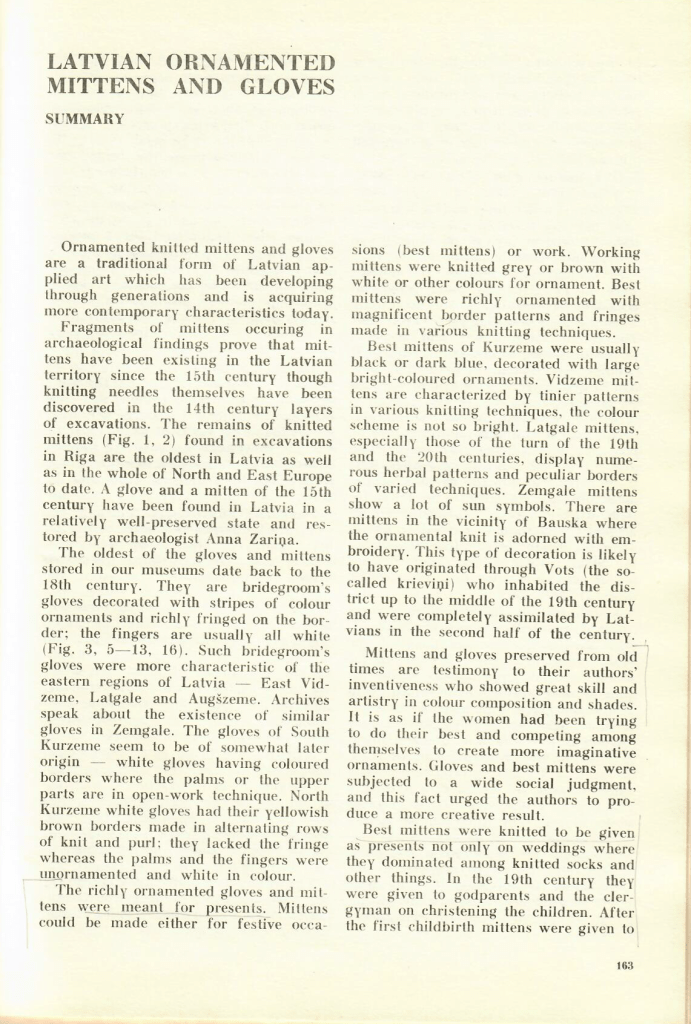
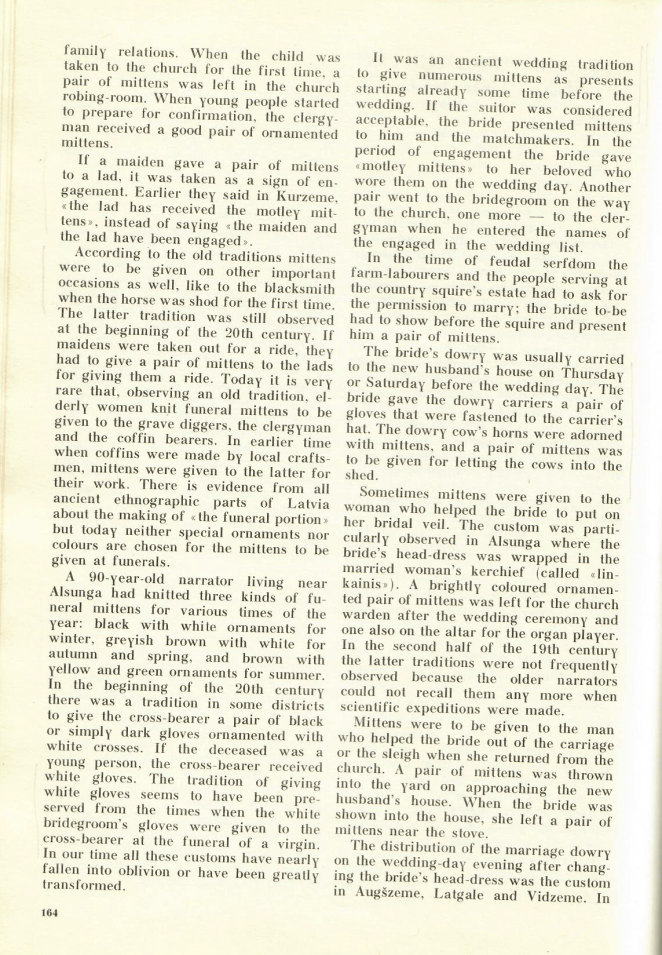
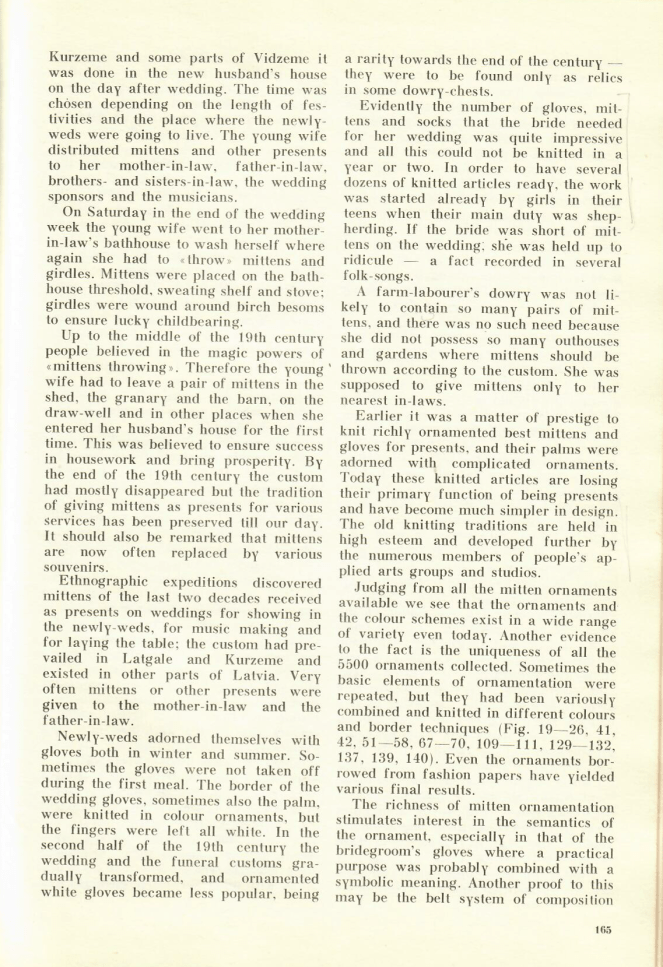
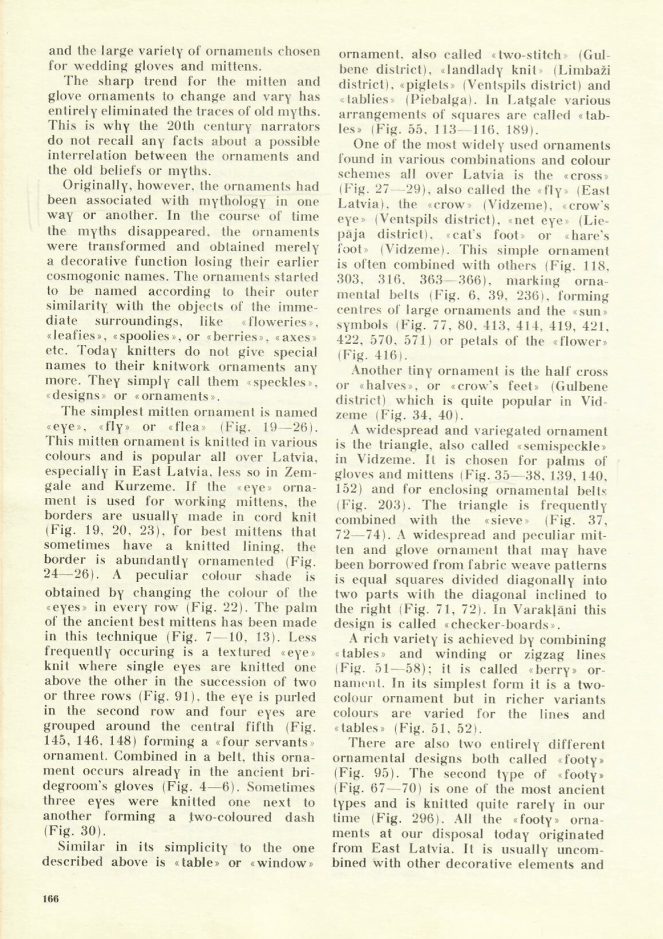
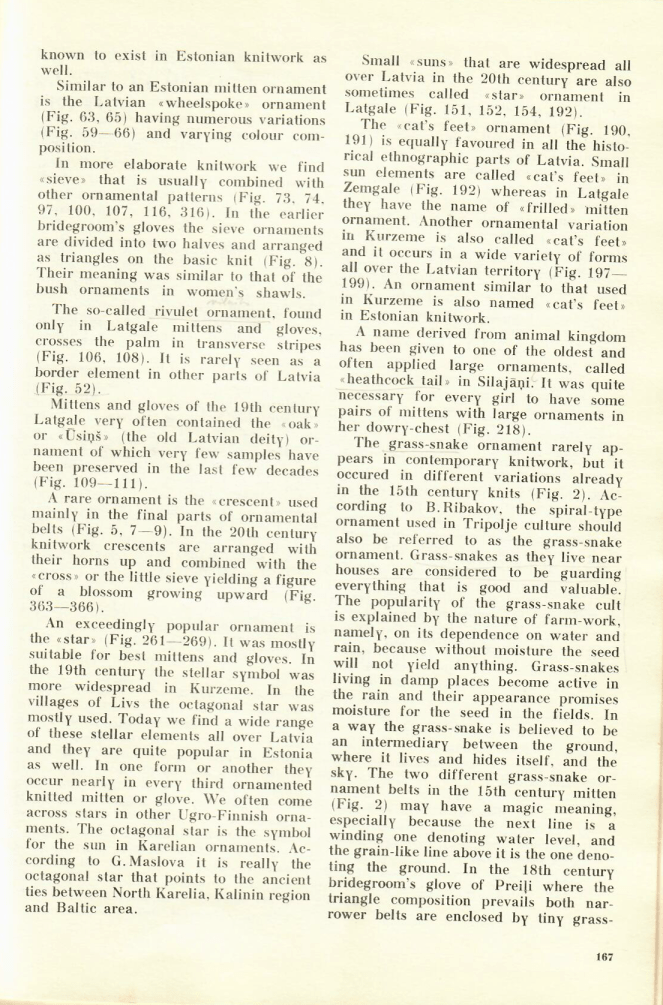
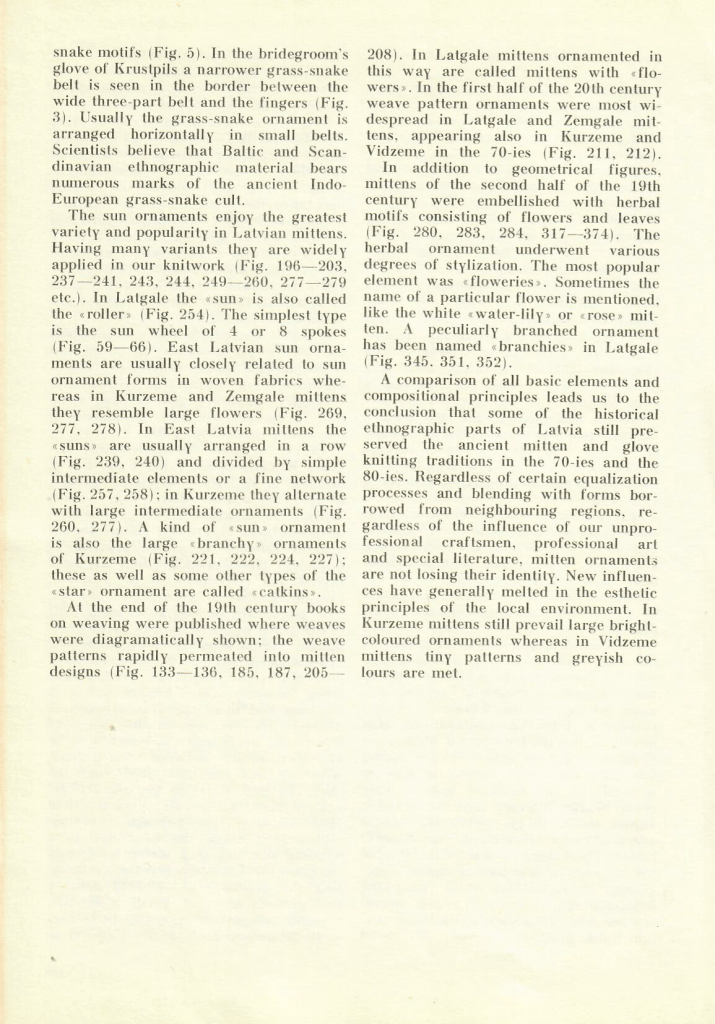
Here below you can find the scanned summary from the book of Mirdza Slava “Latvian Ornamented Mittens”. Slava, M., Latviešu rakstaine cimdi, Zinātne, Rīga, 1990.
I think, that in this article you will learn about another one of my key motivating factors for knitting. I am proud to be a Latvian, and I am bringing forward and spreading in the world the my national knitting traditions and culture.
 knit fits